

Wilder Cultures
Communities, Knowledge, and the Cultural Soil of Place
Wilder Cultures is the social dimension of Wilderculture's work — the communities, knowledge traditions, and relational infrastructure that make a bioregion coherent.
Land and people together
Land regenerates as people regenerate; the two cannot be separated, and the cultural intelligence of a place is as much its substrate as the geology beneath it. We work to recover, weave, and grow forward the cultures these landscapes need, and that need them.
Forensic as well as generative
Distinguishing what was genuinely complex from what has been mistaken for tradition because it is old, and weaving what remains forward into living practice.
Recovery that holds
Ecological recovery without cultural recovery does not hold. These are familiar patterns, and they're the predictable result of intervening on one dimension while ignoring the other two.
Read the full section
The communities of the UK uplands have lived through six thousand years of cultural co-evolution with their landscapes — and through a much shorter period of cultural disruption that has stripped much of what was held in living practice. Place names that once carried management knowledge are still on the maps; the management is largely gone. Surviving farming knowledge is genuine but often fragmentary; what's called "traditional" today is frequently a degraded modern approximation of what it claims to be. The work of Wilder Cultures is forensic as well as generative: distinguishing what was genuinely complex from what has been mistaken for tradition because it is old, and weaving what remains forward into living practice.
A farming household carrying the technical skills but not the lived sense of place; a community with active rural development programmes but losing its young people; a landscape with measured biodiversity gains and no one left who knows what to do with them — these are familiar patterns, and they're the predictable result of intervening on one dimension while ignoring the other two. Wilder Cultures is where we work on the dimension everyone else assumes will sort itself out.
The Foundation of Regenerative Change
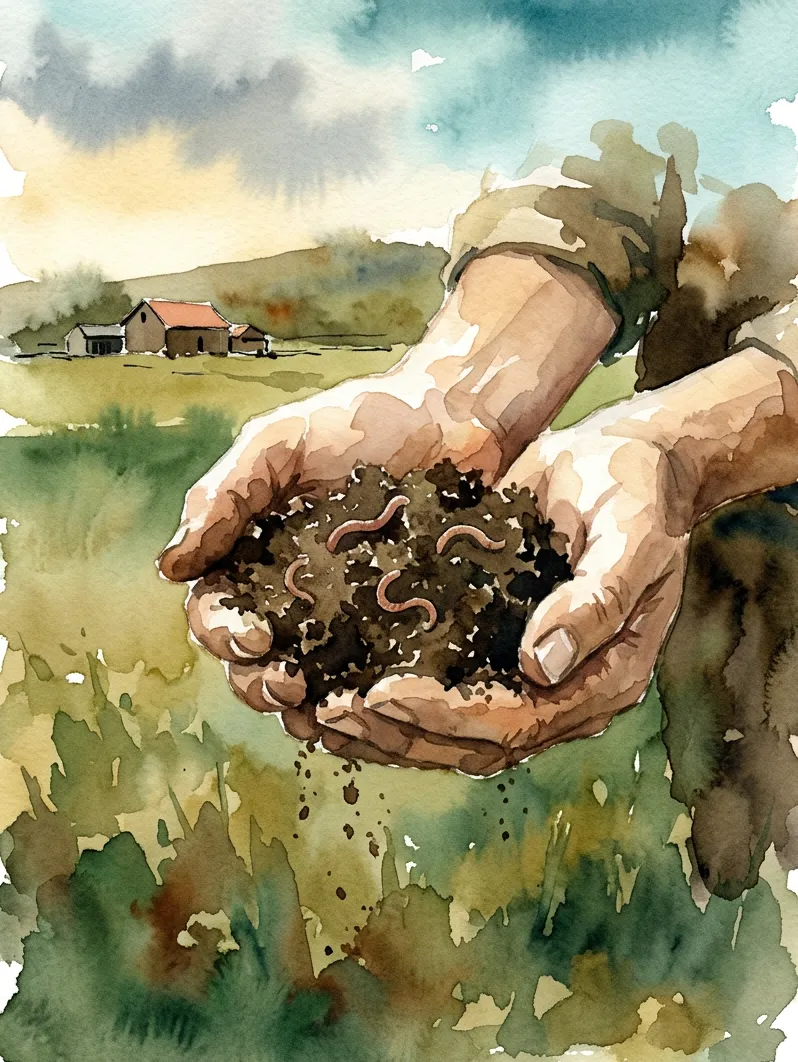
Cultural change is not something that happens after the ecological and economic work is done — it's the substrate that lets the ecological and economic work hold. Communities that have lost their shared sense of purpose, their intergenerational knowledge transmission, or their working relationships across difference will struggle to sustain any kind of regenerative project over the timescales the work actually requires. Building that substrate — what we call cultural soil — is the foundation of everything else.
Through the ROOTED framework and the Rooting to Place process, we work with communities to build that foundation: developing the systems-thinking capacity to read a place as a living whole, recovering the relationships that make collective action possible, and growing the shared vision that gives long-term work its direction. This is slow work. It is also the work that determines whether anything else lasts.
Rooting to Place — A Process of Cultural Recovery
Rooting to Place is the process through which we work with a bioregion's people to build the cultural foundation any later regenerative work has to stand on. The output is not a report. It is a community that has begun to know itself differently.
Three Core Objectives

Know Your Place & People
Map the ecological, historical, and cultural patterns of the bioregion; gather the stories, knowledge, and observations that local people already hold; identify the gaps where further understanding is needed.

Map Community Capacity
Understand who is already engaged, who is missing from the conversation, and where the latent capacity for regenerative leadership sits within the community.

Expand Worldviews
Build the relational and cognitive conditions under which people with very different perspectives can work together on what their bioregion needs — without anyone being asked to abandon what matters to them.
Read the full section
It begins where the place itself begins — with the geology, hydrology, history, and surviving knowledge that make this landscape what it is — and unfolds through a developmental journey that brings diverse community members into a shared, living understanding of their place.
The Process
Deep listening comes first. We work with local people to map the living systems — ecological, cultural, economic — that shape their bioregion. This means gathering diverse voices, establishing working baselines through observation and data, and building the relationships that make everything else possible. Every place has its own starting point, and that starting point is what defines what comes next.
A developmental process — typically unfolding over a year — that takes participants from understanding how their bioregion has come to be what it is to actively shaping what it could become. Through workshops, place-based exploration, and shared enquiry, people with very different perspectives learn to read landscape and community as a living whole. This is where real collaboration becomes possible — not because everyone agrees, but because everyone can now see what they're working with.
What grows from this process is unique to each place — but typically includes a deepening community archive of stories, art, ecological observations, and place-knowledge; a clearer reading of the bioregion's patterns and potential; a core group of trained regenerative leaders ready to drive the next phase; and community-agreed priorities for the bioregional work that follows.
Format and duration are shaped by local conditions, resources, and community capacity. We follow the rhythms of how communities actually develop, not the rhythms of grant cycles.
Cultural change is the substrate that ecological and economic regeneration grows from, not a soft layer added at the end.
Two Scales of Cultural Work
Wilderculture's cultural work runs at two scales that feed each other. Both are needed. Neither works alone.
In specific bioregions
The deep work unfolds in specific UK upland bioregions, where Rooting to Place creates the relational and developmental foundation that lets bioregional regeneration take hold.
A global community
The wide work runs as a global community of citizens applying the same patterns in their own places — anyone, anywhere, beginning where they are.
Cultural soil
We invest first in what we call cultural soil — the relationships, shared understanding, and developmental capacity that enable tangible regenerative work to flourish over time.
Read the full section
The deep work develops the methodology in the most demanding conditions; the wide work tests and refines it in conditions the deep work cannot reach. Both are needed. Neither works alone.
The principle in both scales is the same: cultural change is the substrate that ecological and economic regeneration grows from, not a soft layer added at the end. Like ecological succession, sustainable community transformation requires fertile foundations before it can carry weight.
Where This Work Is Heading
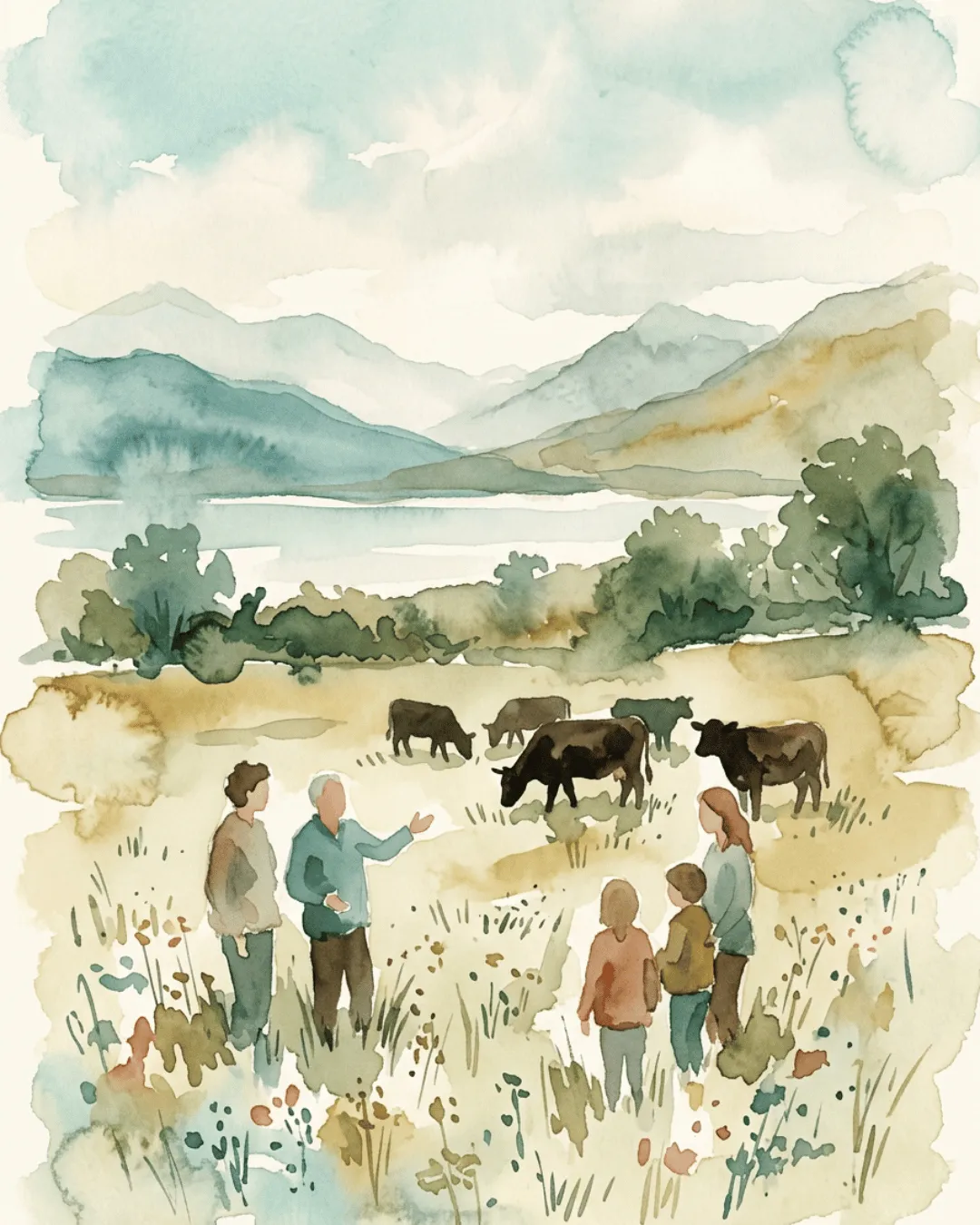
By 2046, Wilderculture's goal is measurable regeneration across one million hectares and six UK upland regions — the Eastern Highlands, the West Highlands and Islands, the Scottish Southern Uplands, the Northern English Borderlands, the Lake District Fells, and the Yorkshire Dales and Bowland. The cultural work of Rooting to Place is what makes that ecological and economic regeneration possible.
Read the full section
A bioregion whose people do not know themselves cannot regenerate the land they live on; a community without shared understanding cannot sustain economic models that depend on collective trust.
Alongside the deep work in those six regions, the global community of citizens applying these patterns in their own places — wherever those places are — is what gives Wilderculture's cultural work its widest reach. Rooted in Celtic and European bioregional cultures, open to anyone drawn to the practice, this community is where the methodology meets conditions the deep work cannot replicate, and where the work of regeneration becomes legible to people who will never visit a UK upland bioregion. Both scales matter. Both are needed. The deep and the wide are one project.