


Our Bioregional Roadmap
Deep Local Work for Global Impact
Wilderculture’s approach prioritises depth over breadth, concentrating intensive development within five carefully selected priority bioregions to learn the deep patterns of regeneration that can be applied anywhere. Simultaneously, our global membership community prepares the “cultural soil” worldwide, building regenerative mindsets and collaborative networks that enable these proven patterns to take root across diverse contexts.
Our Focused Strategy Five Priority Bioregions
Rather than spreading resources thinly across many locations, we’re going deep in five distinct bioregions that serve as living laboratories for bioregional regeneration. Each offers unique learning opportunities whilst building the depth needed for genuine transformation.
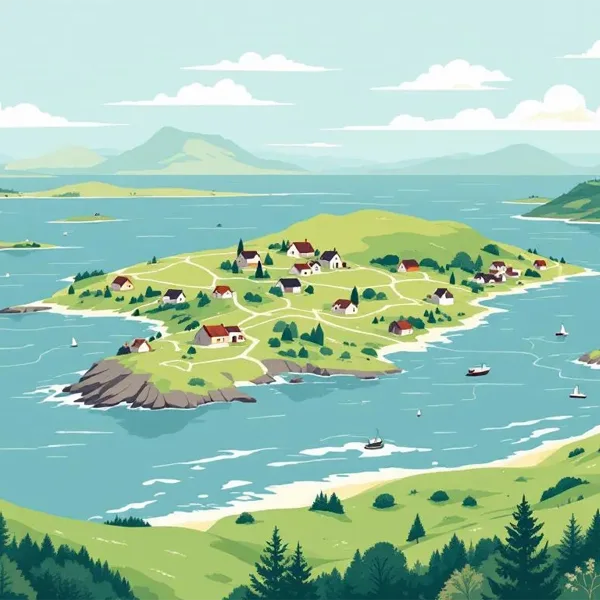
1. West Highlands & Islands Bioregion
- Core Area: Scottish Highlands west of the Great Glen, including Inner Hebrides, Oban, and Loch Linnhe system
- Unique Character: Gaelic culture, crofting traditions, Atlantic maritime climate, temperate rainforest remnants
Why This Matters: Island communities provide powerful models for regenerative self-reliance, whilst crofting systems demonstrate how humans can enhance rather than degrade fragile landscapes. Strong cultural identity and existing farmer networks create fertile ground for community-led transformation.
2. Lake District Fells Bioregion
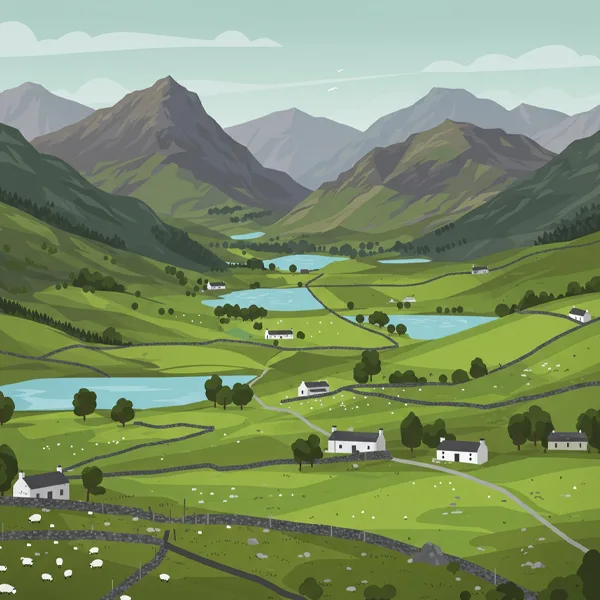
- Core Area: Lake District central massif and surrounding fell farming areas
- Unique Character: Fell farming traditions, Herdwick sheep heritage, established visitor economy
Why This Matters: National Park context provides policy influence opportunities, whilst tourism foundations offer pathways for economic transition. The distinct geological unity and UNESCO World Heritage status demonstrate how cultural landscapes can integrate heritage preservation with regenerative innovation.
3. Southern Scottish Uplands Bioregion
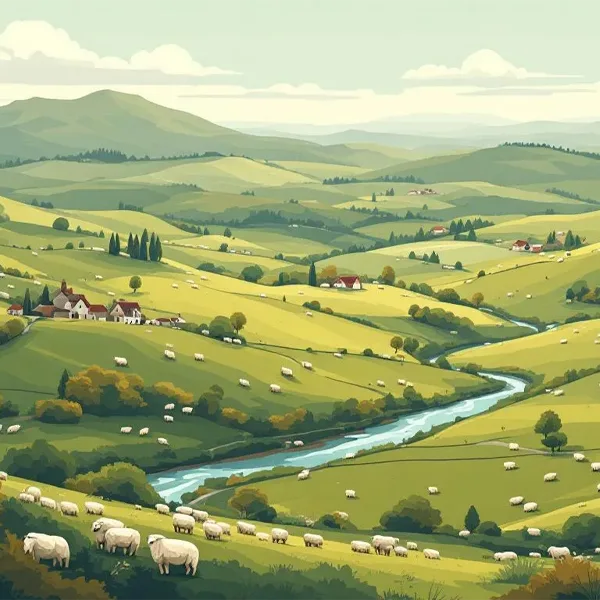
- Core Area: Southern Scotland from Lowther Hills to Cheviot Hills
- Unique Character: Hill farming systems, wool production heritage, historic Borders culture
Why This Matters: As an agricultural transition zone with strategic location and clear watershed boundaries, this bioregion offers insights into scaling regenerative practices across working landscapes whilst honouring historic farming cultures.
4. Central Highlands Bioregion
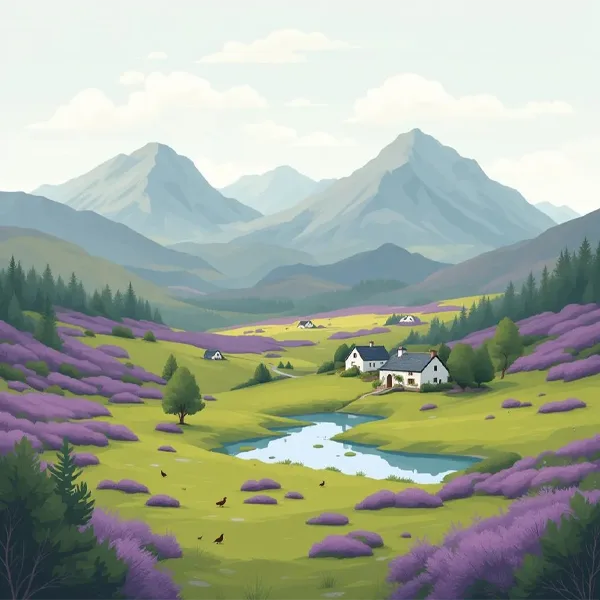
- Core Area: Cairngorms massif and surrounding Highland glens
- Unique Character: Ancient Caledonian forest, Highland estate system, whisky heritage
Why This Matters: Large estate landholdings provide opportunities for landscape-scale restoration, whilst the area’s significance as a wildlife corridor demonstrates how regenerative approaches can integrate conservation with productive land use and cultural economy.
5. Welsh Marches & Snowdonia Bioregion
- Core Area: Snowdonia extending through Welsh-English borderlands, including Shropshire Hills
- Unique Character: Welsh-English cultural interface, mountain-to-lowland transition, strong heritage identity
Why This Matters: This cultural confluence zone with diverse farming systems offers insights into cross-border collaboration and conservation integration, demonstrating how regenerative approaches can bridge different cultural and ecological contexts.
Our Development Process
Learning the Deep Patterns
Each bioregional hub develops through a proven process that creates the conditions for lasting transformation whilst generating transferable insights.
Phase 1: Building Cultural Soil
What We Do: Launch Rooting to Place community engagement programmes and Regenerative Farming Learning Networks that bring diverse stakeholders together to explore their bioregion’s unique character and co-create shared vision.
Why It Works: Just as pioneer species prepare soil for complex ecosystems, we invest first in relationship-building and collaborative capacity that enables regenerative projects to flourish naturally rather than through external imposition.
Phase 2: Enabling Regenerative Projects
What We Do: Support communities to form Bioregional Working Groups, co-create comprehensive regeneration plans, establish community-led finance mechanisms, and launch tangible initiatives like agroecological food production and ecological restoration.
Why It Works: With strong foundations of trust and shared vision, regenerative projects achieve significantly higher success rates whilst maintaining genuine community ownership and adaptation to local conditions.
Phase 3: Self-Organising Systems
What We Do: Communities take full ownership of governance and adaptive management, with Wilderculture transitioning to an advisory role whilst maintaining connection through learning networks.
Why It Works: Mature bioregional systems create complex webs of interconnected initiatives that become self-regulating, continuing to regenerate long after initial investments whilst sharing innovations across the broader network.
Harvesting Learnings for Global Impact
Our depth-focused approach creates:
- Transferable Methodologies: Proven processes tested across diverse ecological, cultural, and economic contexts that can inform regenerative development anywhere.
- Demonstration Sites: Mature examples of bioregional regeneration showing how communities can become economically self-reliant whilst enhancing ecological and cultural foundations.
- Trained Practitioners: Community leaders and regenerative specialists capable of initiating similar work in new areas, spreading the patterns organically.
- Economic Models: Proven approaches to community-led finance and bioregional development that show how to retain wealth locally whilst supporting landscape-scale regeneration.
Global Community: Preparing the Soil Worldwide
Parallel to our bioregional work, the Wilder Community membership programme builds regenerative capacity across thousands of individuals worldwide who implement wilder living practices in their own places. This creates the collaborative networks, shared values, and practical knowledge base that enables our proven patterns to take root wherever conditions are ready.
By 2035, this dual approach will have created both the deep local demonstrations and global cultural foundation needed for regenerative transformation to flourish at scale. Our five priority bioregional hubs will serve as teaching sites and learning networks, sharing innovations whilst our global community of 10,000 regenerative practitioners responds to global challenges through place-based actions.
Why this Roadmap Matters
Rather than trying to work everywhere at once, we’re learning the fundamental patterns of how communities can become regenerative stewards of their landscapes. These patterns—from building collaborative culture to designing community-led economies—apply whether you’re in the Scottish Highlands or anywhere else on Earth.
Our bioregional roadmap represents an investment in humanity’s maturation: supporting the emergence of regenerative cultures and economies that address interconnected crises whilst following natural development patterns. Through concentrated local work and distributed global preparation, we create conditions for exponential positive change that continues long after initial investments.
Ready to be part of this transformation? Whether you’re in one of our priority bioregions or anywhere else in the world, there are pathways to engage with our work and contribute to the regenerative future we’re building together.
Get Involved

For Citizens
Join our global community building wilder culture
For Farmers
Transform your land with regenerative practices

For Funders
Support bioregional regeneration at scale