



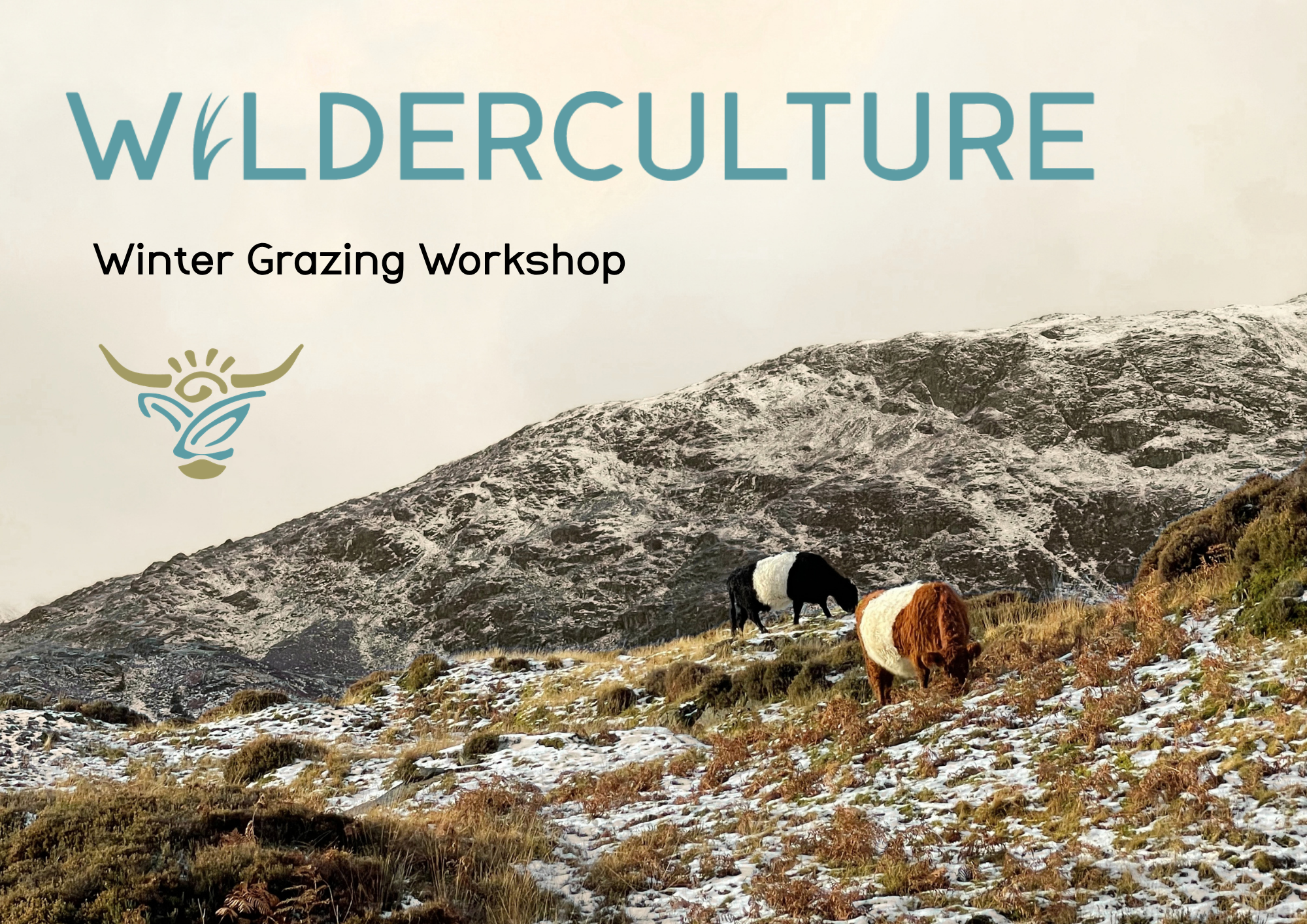
Winter Grazing Workshop
January 19, 2027 @ 9:30 am - January 20, 2027 @ 4:30 pm
£475.00
Outwinter your stock without losing condition, fertility or ground.
Join us for two days of practical winter grazing training for upland and hill farmers, at Gowbarrow Hall Farm beside Ullswater in the Lake District.
More farms are turning to outwintering to cut costs, rest buildings and let stock do the work. Some make it look easy. Others lose condition, fertility and ground in a single hard winter. In our experience the difference comes down to three things: stock suited to the ground, a winter plan made in summer, and management that reads the animals every day. This course gives you all three.
Gowbarrow is a Wilderculture project and demonstration farm, where Sam and Claire Beaumont have moved from three sward species to fourteen with no reseeding, and water infiltration from an inch an hour to a litre in five minutes. You will learn in the farm’s training barn and out on its winter blocks, with the Beaumonts’ own stock.
The training includes a Cumbrian lunch with produce from the farm on both days.

Learn how to:
- Understand what the rumen needs in winter, in plain terms
- Plan the winter in summer: defer forage, site bales, and protect soil and watercourses
- Test forage at the right times and read the results
- Use bale grazing and protein-rich forage well, and know when supplements are the least bad option
- Gut fill and dung score daily, and body condition score weekly
- Decide when to move, when to feed and when to step in
- Build a hill-hardy herd and flock, one small step at a time
- Draft a winter plan for your own farm


Who is this for?
Upland and hill cattle and sheep farmers, crofters, estate farm managers and stockmen, and the advisers who support them. The course is grounded in cereal-free, pasture-based and organic systems.
Afternoons are spent outdoors in winter weather, so you will need to be able to walk over rough ground. We go slowly, with plenty of stops. Places are limited so everyone gets hands on stock in the outdoor sessions.
What to bring
- Waterproofs and boots
- A map or aerial image of your own farm
- Any forage analysis you already have
- Your stock numbers, breeds, and calving or lambing dates

What we will be covering
Led by Caroline Grindrod, with hosts Sam and Claire Beaumont, the course works from the rumen outwards: why winter forage runs short of protein before it runs short of bulk, what that means for how you use standing forage, bale grazing and supplements, and how a full rumen keeps stock warm. Then we go out onto Gowbarrow’s winter blocks to practise the daily checks that let you act before condition is lost, read in the right order.
Stock suited to the ground
Breeds and genetics that can do the job on hard, wet winters, built through the record.
A winter plan made in summer
Deferred forage, well-sited bales and a forage budget that adds up before the first frost.
Management that reads the animals
Daily gut fill and dung scoring, weekly condition scoring, and clear trigger points for action.
You will take home
- A draft winter plan for your own farm
- The course text, Outwintering in the Uplands: A Proactive, Welfare-First Guide
- A daily and weekly recording sheet
- A forage testing calendar: end of summer, midwinter, end of winter
- The decision tree and pocket checklist on one laminated card

Itinerary
Day 1
Planning the winter
What the rumen needs, what the ground can supply, and how to fill the gap between the two.
| 09:30 | Arrival, coffee and introductionsEach participant names their farm, stock and biggest winter worry. |
| 10:00 | Why outwinter, and why it goes wrongThe case for outwintering, the three things that decide success, and the welfare line and the law. |
| 10:45 | The rumen in winterMicrobes, ERDP and the 7–9% crude protein thresholds; substitution; why cereals undermine rough forage; how a full rumen keeps stock warm, and why they must not wait at the gate. |
| 11:30 | Coffee |
| 11:45 | What the ground suppliesHill habitats through the year; why Molinia does not defer; deferred inbye; reading forage tests and when to sample. |
| 12:30 | Lunch |
| 13:30 | Walking the winter planOn the farmSam and Claire walk the group through their winter blocks, bale sites and water points: how they were chosen, what works, and what they would change. |
| 15:00 | Tea |
| 15:15 | Building the budgetForage budgeting: head × days × intake against standing forage and bales; bale grazing done well; protein-rich forage first; Pasture for Life and organic rules. |
| 16:15 | ReflectionOne thing to take home tonight. |
| 16:30 | Close |
Day 2
Running the winter
Reading the animals and acting in time, then turning the two days into a plan for your own farm.
| 09:30 | Check-inOne insight from yesterday. |
| 09:45 | The daily and weekly checksOn the farmHands on with stock: gut fill and dung scoring; body condition scoring by eye and by hand; spotting the spread and the shy feeders. Everyone scores the same animals, then we compare. |
| 11:15 | Coffee |
| 11:30 | The decision treeWelfare, quantity or protein? Real scenarios from the morning’s scores: when to move, when to open bales, when to supplement, when to separate. |
| 12:30 | Lunch |
| 13:30 | Breed, genetics and small stepsBreed tiers for hard, wet winters; selecting towards a hill-hardy herd and flock through the record; why a bad winter costs several years of fertility and selection. |
| 14:15 | Your winter planWorking in pairs, each participant drafts their own plan: groups, blocks and bale sites, forage budget, testing dates, checking routine and trigger points. |
| 15:30 | Tea |
| 15:45 | Talking plans throughAn informal round-up around the table. Share as much or as little of your plan as you like, and pick up ideas from the trainers and the rest of the group. |
| 16:15 | CloseIntentions for the coming winter, and how we stay in touch. |
Welfare first
Welfare is not traded for feed savings, ever.
This is the one line the course never crosses. Everything we teach about cutting winter costs sits inside it, from the decision tree to building a hardier herd and flock over time.
The farm entrance is at ///sublime.success.unlimited. Gowbarrow’s restored barn has accommodation for training participants; ask about availability at info@wilderculture.com. Please read our refund policy before booking.